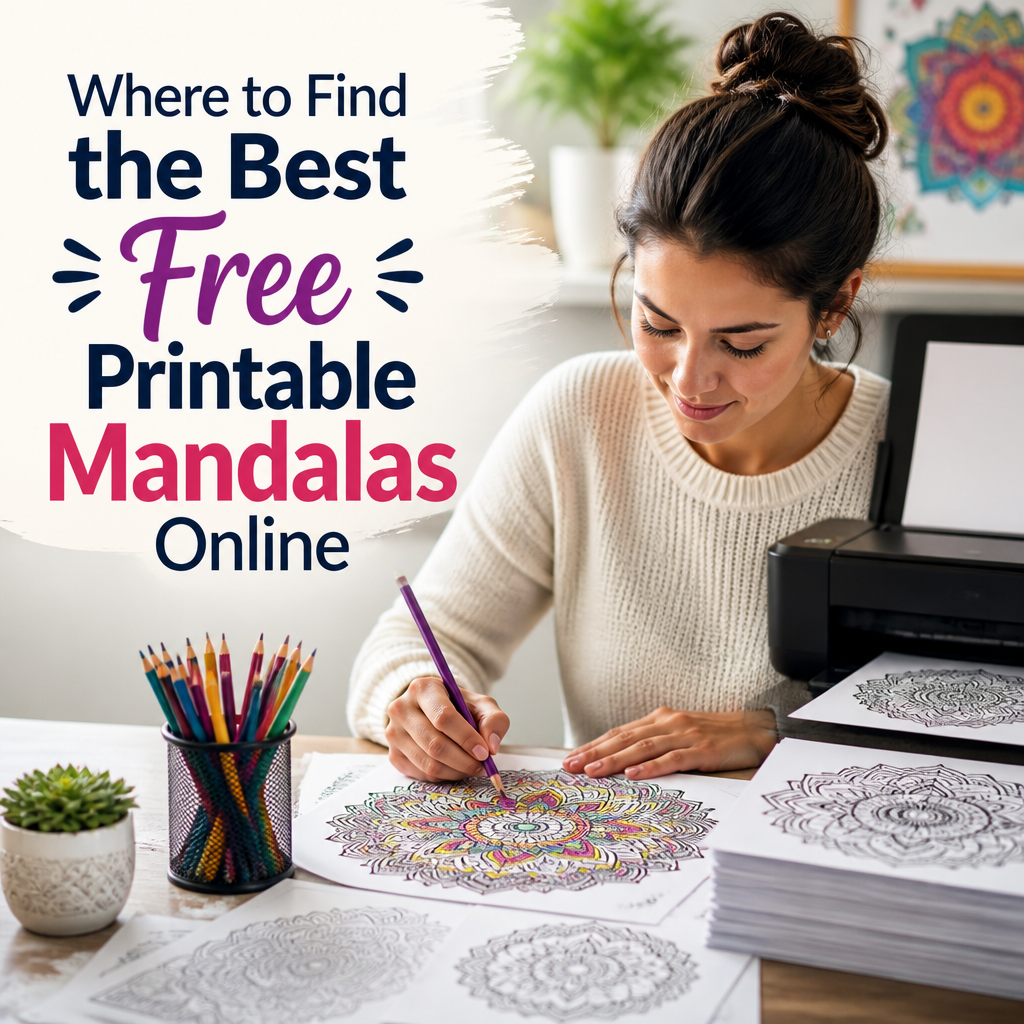
Where to Find the Best Free Printable Mandalas Online
Anuncios
Ready to unwind, focus, and create something beautiful—without spending a cent? Free printable mandalas can be a wonderful gateway into relaxation, mindfulness, and even skill-building. The trick is knowing where to look, how to choose the right designs, and how to use PDFs effectively so your mandala practice stays smooth from beginner to advanced. In this guide, you’ll learn exactly where to find the best options online, what to avoid, and how to build a “mandala workflow” that fits your level.
- What Are Free Printable Mandalas and Why They’re So Popular
- How to Choose High-Quality Printable Designs (Even When They’re Free)
- Beginner-Friendly Sources: Start Here
- Intermediate Finders: More Variety, Better PDFs
- Advanced Options: Customization, Themes, and Deep Libraries
- How to Download, Print, and Use Mandalas Like a Pro
- Examples: Practical Print Plans for Different Goals
- Common Mistakes and How to Fix Them
- Your Mandala Setup Checklist (Quick Summary)
- Conclusion: Make Your Practice Consistent and Creative
What Are Free Printable Mandalas and Why They’re So Popular
Free printable mandalas are symmetrical, decorative patterns designed to be colored, traced, or used for creative projects. People love them because they support calm focus. You don’t need drawing talent to start—you just need a few good online printables and a comfortable routine.
What makes them especially popular is access: you can find free printable mandalas almost instantly online, download them as PDFs, and print them from home, a local shop, or a library printer. Many creators also provide printable coloring pages that range from very simple beginner designs to intricate, high-detail styles for experienced artists.
Anuncios
How to Choose High-Quality Printable Designs (Even When They’re Free)
Not all “free” mandalas are equally useful. If you want satisfying results—especially on the first try—use this quality filter before downloading.
1) Look for PDF downloads with crisp lines
Prefer PDF downloads that keep lines sharp at different print sizes. If you only see low-resolution images, the final print can look fuzzy.
2) Check line thickness and page contrast
Anuncios
Beginner mandalas should have thicker, clear outlines. Advanced mandalas can be detailed, but the line clarity must remain high enough for coloring.
3) Confirm the design style matches your goal
- Relaxation: medium complexity, large spaces for color.
- Skill-building: layered patterns with repeat motifs.
- Craft projects: designs that scan well for cutting or tracing.
- Kids/teens: fewer tiny sections, bold symmetry.
4) Beware of clutter and “too small” details
Even gorgeous advanced work can be frustrating if lines get too small for your printer. A good rule: if you’ll color with markers or crayons, choose slightly bolder designs.
More Articles
 Flower & Nature Mandalas
How to Print Flower Mandalas at Home
If you’ve ever wanted to unwind with beautiful art, flower mandalas are one of the...
Show More Mandalas for Adults
How to Print High-Quality Mandalas at Home
Want calming, beautiful mandalas on paper without spending a fortune? The good news is that...
Show MoreBeginner-Friendly Sources: Start Here
If you’re just starting, your best strategy is to find a consistent source of designs that fit your skill level. You want quick wins, not frustration.
Option A: Mandala websites with beginner sets
Many mandala websites organize pages by difficulty (easy/medium/hard). Search terms like “easy mandala PDF” or “beginner coloring mandalas” can help. When you find a site with a clear layout, bookmark it.
Practical example: Download a set of 10 easy mandalas and print 2–3 at a time. Color one per day for a week. You’ll quickly see which styles help you relax best.
Option B: Search for “printable coloring pages” with symmetry-friendly styles
Because many creators publish free printable coloring pages, you can access beginner-friendly patterns without hunting for “mandala” specifically. Try searches like “circular coloring page,” “zentangle mandala easy,” or “flower mandala coloring page.”
Practical example: Choose coloring pages with larger petals and fewer rings. If you’re using colored pencils, these will feel smoother to shade.
Option C: Use free templates for consistent practice
Some sites offer free templates or starter pages designed for tracing or learning symmetry. Templates are great when you want to color inside defined sections without guessing the structure.
Where to look (quick starter list)
- Websites that label difficulty level clearly
- Pages that provide PDF and preview thumbnails
- Collections focused on “easy” or “kid-friendly” mandalas
- Sites that include both single mandalas and small pattern sets
Intermediate Finders: More Variety, Better PDFs
Once you’ve colored a handful of easy pages, your preferences will sharpen. You may want more variety, seasonal themes, or patterns that feel “just challenging enough.” At this stage, intermediate sources become your best friend.
1) Explore mandala libraries and categorized collections
Look for a mandala library—not just a random set of images. Libraries typically organize designs by style, complexity, or theme, and they make it easier to return later.
Practical example: Build a folder called “Spring Mandalas” and save PDF downloads that match that theme. Each time you want to color, you already know what to print.
2) Use mandala websites that offer “collections” instead of single files
A collection often means cohesive styles, consistent line thickness, and easier file management. Many sites also update their libraries, giving you new choices without constantly searching.
3) Find coloring resources that explain how to use pages
Some creators don’t just provide downloadable pages—they also provide coloring resources, like guidance on shading, layering color, and turning black-and-white into finished art. This helps you progress faster than simply downloading more pages.
4) Check whether the page is printable at multiple sizes
Intermediate users often print on different paper formats. Prefer designs that work well on A4, Letter, or even larger formats. If a design only looks good at one size, you may lose options.
Advanced Options: Customization, Themes, and Deep Libraries
Advanced colorers and creators usually want three things: complexity, consistency, and control. This is where online resources can move from “free downloads” to a genuine creative system.
1) Choose high-detail designs with consistent line integrity
Advanced mandalas can include micro-patterns, tight spaces, and multiple layers. The best sources keep lines clean so your printer doesn’t smear the details. If you’re using gel pens or fine markers, clarity becomes even more important.
2) Use online printables with special formats
Some online printables are optimized for specific tools (like markers) or specific print sizes (like poster-style output). Look for descriptions or previews showing the final scale.
3) Find mandala websites that support remixing workflows
Advanced artists sometimes trace, redraw, or combine motifs. The best sites offer high-contrast, single-page PDFs that are easy to edit or trace.
Practical example: Download a detailed mandala as a PDF, print one copy, and trace the outer ring onto a fresh page. Color the inner structure differently to create a “hybrid” style.
4) Build your own advanced mandala library
Don’t just collect files—organize them. Create folders by:
- Complexity (Easy/Medium/Hard)
- Style (floral, geometric, spiritual, abstract)
- Tool (pencil, marker, ink, mixed media)
- Theme/date (holidays, seasons, personal goals)
This turns a random download habit into a true mandala library you can rely on.
How to Download, Print, and Use Mandalas Like a Pro
Even with the best designs, printing can make or break your results. Here’s a professional workflow that works for both beginners and advanced users.
1) Download and rename files immediately
As soon as you download PDF downloads, rename files like: “2026-08-Relaxing-Easy-01.pdf”. This saves time when you’re searching later.
2) Print test pages first
Before committing to a full batch, print one sample. Check:
- Line thickness
- Whether tiny details disappear
- Margin placement
3) Choose the right paper
- Colored pencils: standard printer paper works, but smoother paper improves blending.
- Markers: consider thicker paper to reduce bleed-through.
- Ink pens: choose heavier paper to prevent ink spread.
4) Use a consistent coloring strategy
For faster results, pick a repeatable approach:
- Color background sections first (if any).
- Then do the largest rings.
- Finally, add highlights and details in the small sections.
This helps you avoid running out of time or skipping the most satisfying parts.
Examples: Practical Print Plans for Different Goals
Example 1: 7-day beginner relaxation plan
Goal: calm focus with low friction. Use free printable mandalas labeled “easy.” Print two different designs, then rotate for variety.
- Day 1–2: Simple floral mandalas (big petals)
- Day 3–4: Geometric mandalas (clear rings)
- Day 5–6: Repeat pattern mandalas (same structure, different color palette)
- Day 7: Your favorite design from the week
Example 2: Intermediate skill-building with themed pages
Goal: develop shading control and color planning. Download a set from a mandala library or categorized mandala websites. Choose medium complexity only.
- Pick one theme (e.g., ocean, sunset, autumn)
- Use the same base palette across 3–4 mandalas
- Change only one variable per page (e.g., highlight color, background shading)
Example 3: Advanced workflow for mixed media
Goal: create artwork you can frame or gift. Use highly detailed printable coloring pages and treat each as a template for layering.
- Print on heavier paper.
- Color outer motifs first, then inner micro-details.
- Optionally trace select sections onto a second copy for layering effects.
With advanced designs, a small remix can turn a coloring page into a unique piece of art.
Common Mistakes and How to Fix Them
Mistake 1: Printing too small
If a design is packed with detail, printing at a smaller scale can make it uncolorable. Fix it by scaling up (check printer settings) or choosing larger-format pages.
Mistake 2: Choosing designs that don’t match your tools
Markers need thicker paper and bolder lines; pencils are more forgiving. If your outlines are too thin, switch tools or find pages optimized for your style.
Mistake 3: Downloading without organizing
You’ll quickly forget which pages you loved. Use folders so your online printables collection remains usable.
Mistake 4: Ignoring quality previews
Thumbnails can hide problems. If the preview looks washed out, the final PDF likely won’t improve. Look for crisp previews whenever possible.
Your Mandala Setup Checklist (Quick Summary)
- Start with easy free printable mandalas to build confidence
- Prefer PDF downloads with sharp lines and clear symmetry
- Use free templates when you want structure or tracing practice
- Explore a mandala library for organization and variety
- Choose coloring resources that teach shading or workflows
- Print a test page before doing a full set
Conclusion: Make Your Practice Consistent and Creative
The best place to find free printable mandalas online isn’t just “any website”—it’s the one that matches your level, provides clear PDF downloads, and offers enough variety to keep your practice enjoyable. Begin with beginner-friendly mandala websites that focus on easy structures, move toward intermediate collections for better complexity, and at an advanced level, build your own organized mandala library for customization and deeper artistic workflows. If you apply the quality checks, printing strategy, and folder organization from this guide, you’ll turn random downloads into a reliable creative routine—one beautiful page at a time.