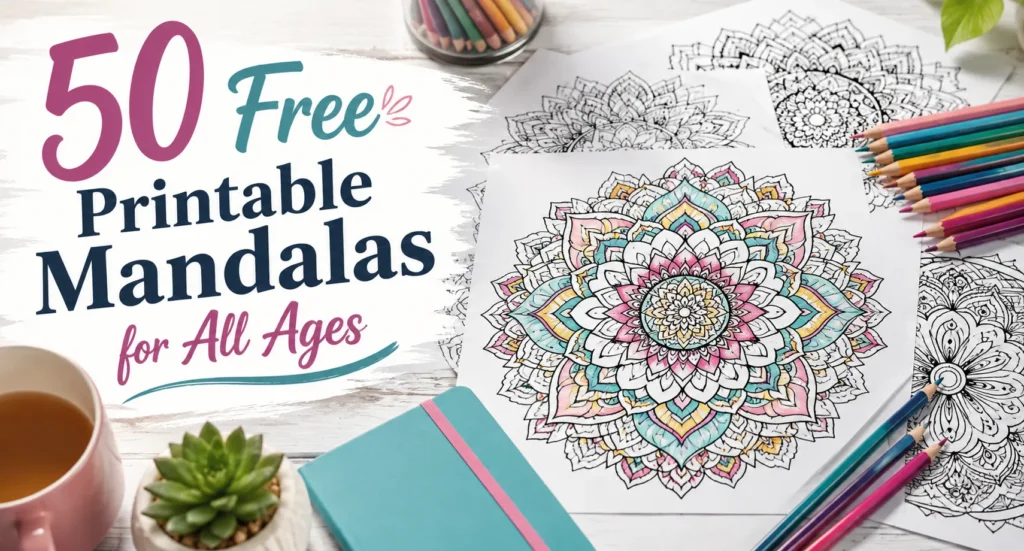
50 Free Printable Mandalas for All Ages
Anuncios
If you’re looking for a relaxing activity that fits your schedule, free printable mandalas are a perfect choice. They’re simple to start, calming to color, and versatile enough for kids, teens, and adults. In this guide, you’ll find 50 ideas you can download as printable PDF pages or use as inspiration with your own mandala templates. Whether you want adult coloring patterns with intricate details or kids coloring designs with friendly shapes, you’ll get plenty of variety—and lots of “I can’t wait to color this” moments.
Below is a numbered list of 50 mandala styles, each with a clear description and a concrete example of how to use it. You can treat them as coloring pages for a quiet evening, classroom activities, travel-time entertainment, or even as seasonal crafts. Many people start with free downloads because it’s easy: choose a design, print it, and begin. Let’s dive in!
-
1) Classic Round Mandala (Beginner-Friendly)
This is the “go-to” mandala for anyone new to coloring. Classic round layouts use repeating circles, dots, and petal rings—great for practicing symmetry. If you’re using a printable PDF, this pattern also works well because it won’t waste ink on tiny, hard-to-see details.
Example: Print one page and color in the outer petal ring with alternating colors (e.g., blue-red-blue). Then use yellow for the inner circles to make the pattern pop.
-
2) Floral Mandala (Soft Petals + Leaves)
Floral mandalas feel natural and inviting. Petals mimic flowers, and leaf shapes add organic movement. They’re popular for kids coloring because the design reads clearly, even with simple coloring.
Example: Choose 3 colors only—pink, green, and white—and color each petal in a repeating sequence while leaving some highlights blank.
-
3) Sunburst Mandala (Energetic Rays)
Sunburst designs feature long rays radiating from the center. This is ideal if you want a mandala that feels “bright” even in black-and-white. For adult coloring, you can add shading and texture to the rays.
More Articles
 Mandalas for Adults
25 Beautiful Mandalas for Adults to Print and Relax
Ready to trade screen time for something calming and creative? Mandalas have a special way...
Show More Animal Mandalas
30 Animal Mandalas to Print: Cats, Dogs, and More
Looking for a fun, calming activity that also looks great on your wall? Animal mandalas...
Show MoreExample: Color the rays in a gradient pattern: outer rays in orange, middle in yellow, and inner rays in light peach.
-
4) Geometric Hex Mandala (Clean and Modern)
Geometric mandalas use triangles, hexagons, and clean lines. They’re satisfying because each segment is distinct. If you love “organized” coloring, this is a great choice for both kids and adults.
Example: Pick one color for triangles and another for hexagon borders, leaving every third segment uncolored for contrast.
-
5) Star-Centered Mandala (Sharp Focus)
A star in the center adds a focal point that makes the entire page feel dynamic. It’s excellent for encouraging steady coloring because the star tips guide your eyes as you fill in sections.
Example: Color the center star in dark purple, then outline each surrounding point with a lighter shade to highlight structure.
-
6) Lotus Mandala (Spiritual Symbol)
Lotus motifs are timeless and calming. The layered petals create natural “rings,” making them easy to color even if you’re using simple markers. This one is a classic among mandala designs because it feels meaningful without being overly complex.
Example: Color the lotus petals from outside to inside using a 5-step palette (teal → aqua → green → lime → yellow).
-
7) Paisley Mandala (Elegant Curves)
Paisley-inspired mandalas mix curves and teardrop shapes. They’re great for adults who enjoy detailed shapes and for kids who like smoother, curved lines. If you’re looking for variety among coloring pages, this style stands out.
Example: Color every other teardrop in a contrasting color (navy and gold tones work well).
-
8) Mandala Rings (Simple Concentric Style)
If you want a quick win, concentric ring mandalas are perfect. They reduce decision fatigue because you’re basically coloring “layers.” This works wonderfully as a starting point for kids and as a relaxing warm-up for adults.
Example: Color each ring with one color and alternate thick-thin patterns by leaving a narrow uncolored border.
-
9) Heart Mandala (Romantic Center)
Heart centers turn a mandala into a giftable page. It’s a great option for family projects, Valentine’s Day crafts, or simply coloring something “sweet.”
Example: Color the heart in red and rose, then use a neutral palette (beige, tan, gold) around it to balance the look.
-
10) Butterfly Mandala (Wings + Symmetry)
Butterfly mandalas combine wing shapes with radial symmetry. They’re ideal for kids who love animals and for adults who want a themed piece. Because the wing patterns repeat, it’s easy to maintain rhythm while coloring.
Example: Color one wing pattern as a mirror of the other to keep the symmetry crisp.
-
11) Dreamcatcher Mandala (Feathers and Web)
Dreamcatcher styles bring a boho vibe. They often include feather-like segments and a webbed center—beautiful for adult coloring when you use fine-tip pens or colored pencils.
Example: Color feathers with a gradient and use tiny dot accents along the web for texture.
-
12) Wave Mandala (Meditative Flow)
Wave-based mandalas use repeating curves that feel like ocean motion. This can be very relaxing because your hand follows a soothing pattern. It’s also a fun choice for classroom sessions—waves are easy to recognize.
Example: Use two shades of blue and alternate them in each wave band for a calming effect.
-
13) Leaf Mandala (Botanical Rings)
Leaf mandalas bring a natural theme with oval leaves and branching patterns. These work beautifully for both kids coloring (simple leaf fills) and adults (layered shading and crisp outlines).
Example: Color leaves from dark to light green as they move outward from the center.
-
14) Candle Flame Mandala (Cozy Center)
Flame centers look cozy and warm. The flame shape gives a natural focal point, while the surrounding rings create a structured frame. Great for seasonal coloring or quiet evenings at home.
Example: Color the flame yellow to orange (center → edges), then add small dot highlights inside the flame area.
-
15) Mandala with Arrows (Direction + Energy)
Arrow-based radial patterns add energy to your coloring page. They’re visually stimulating without being chaotic, which makes them surprisingly satisfying for adults and fun for kids.
Example: Use a single color family (blue tones) and vary pressure to make the arrows look shaded.
-
16) Circular Maze Mandala (Puzzle Feel)
Maze mandalas are like a coloring puzzle. The segmented “path” design keeps you focused and helps prevent accidental smudging when you color carefully along lines.
Example: Color every “path” section with a pattern: stripes, dots, or solid fill—choose one style and repeat.
-
17) Water Droplet Mandala (Cool Highlights)
Droplet shapes create a shimmering effect on paper. This style is great if you want a mandala that looks dynamic even without heavy shading. For adults, metallic-looking colored pencils can make droplets feel realistic.
Example: Color droplets in light blue, then leave a tiny white oval highlight near the top of each droplet.
-
18) Mandala Flowers in a Frame (Tabletop Aesthetic)
This style often has a decorative border around a central floral mandala. It’s perfect for printing and displaying, since the outer frame makes the page feel complete even when you’re using simple colors.
Example: Color the border with alternating colors (e.g., purple and green) and keep the center lighter.
-
19) Crown Mandala (Royal Details)
A crown-shaped center makes the mandala feel celebratory. It’s a fun pick for kids’ birthdays and a creative challenge for adults who like symmetrical details. If you’re browsing free printable mandalas, crowns are a popular “special occasion” theme.
Example: Color the crown with gold tones and outline each crown segment with a darker shade.
-
20) Mandala of Constellations (Night-Sky Vibe)
Constellation themes add tiny star points and connecting lines. This is an excellent option for children because it feels like making their own “night map.” Adults can add glow effects by leaving small sections uncolored.
Example: Color star points in bright yellow and connect lines in deep blue.
-
21) Mandala with Bowtie Shapes (Playful Rhythm)
Bowtie-like repeated shapes create a playful pattern. It’s easy to keep coloring evenly because each “knot” looks similar. This works well with markers and is beginner-friendly.
Example: Color bowties with two-tone shading: fill one half light color and the other half dark color.
-
22) Spiral Mandala (Classic Calm)
Spiral mandalas are relaxing because your eyes track the movement toward the center. They’re a good choice if you’re looking for mindfulness-style adult coloring sessions. Many mandala templates use spiral bases because they’re forgiving.
Example: Color spiral bands in repeating colors (red, orange, yellow) to create a warm, energetic look.
-
23) Mandala with Triangles (Scale and Precision)
Triangle-heavy designs feel like a tessellation. They’re great for adults who enjoy fine detail and for kids who like to color by “rows.”
Example: Use a consistent palette: one color for upward triangles and another for downward triangles.
-
24) Circle Flower Mandala (Bloom Layers)
This design uses round flower petals arranged in layers. It creates a soft, blooming look without requiring complex shading. Great for both kids coloring and adults who want something satisfying but not overwhelming.
Example: Color each petal ring with a different shade, starting with light petals in the inner rings.
-
25) Mandala with Sunflowers (Bold and Cheerful)
Sunflower-style mandalas can include center circles and multiple petal shapes, producing a cheerful effect. Adults can add depth by shading centers and using patterned fills.
Example: Color the outer petals in warm yellow and the center disks in brown with tiny dot textures.
-
26) Mandala with Feathers (Soft Texture)
Feather mandalas are perfect for creating a “flowing” look. Because feathers often have repeating barbs, it’s easy to color consistently. This can be a calming activity for both kids and adults.
Example: Color each feather segment with alternating colors (turquoise and cream) and add light dots along the barbs.
-
27) Mandala with Leaves and Spirals (Nature + Motion)
This hybrid style combines leaf shapes with spiral patterns. It’s a great pick if you’re searching for mandala designs that offer variety. Adults can emphasize the spiral structure; kids can focus on larger leaf shapes first.
Example: Color leaves solid green, then use a swirl pattern (lines or dots) inside the spiral rings.
-
28) Mandala Border Only (Quick Printable)
Border-only mandalas are great when you want to frame another artwork or when you’re short on time. As a printable PDF, you can print multiple pages and let kids color borders during parties or car rides.
Example: Color the top border with stripes and the side borders with dots for a playful contrast.
-
29) Mandala with Drops Around Center (Lightweight)
Droplet accents around a central design keep the page airy. It’s less dense than complex mandalas, making it ideal for kids coloring and for adults who want a short, relaxing session.
Example: Leave every other droplet white for “sparkle,” then color the rest in a single bright blue.
-
30) Mandala with Braided Patterns (Detail Boost)
Braided mandalas create intricate-looking interwoven sections. These are perfect for adults who want a rewarding challenge. If you’re using fine pens, the braided look will really stand out.
Example: Color alternating braid strands with two colors and outline the crossing points with a darker shade.
-
31) Mandala with Rings and Dots (Classic Texture)
Dot-and-ring mandalas are a favorite because the texture is easy to control. You can use marker dots for quick results or colored pencils for more delicate shading. This style is great for beginners.
Example: Make the dots larger in the outer ring and smaller toward the center to create depth.
-
32) Mandala with Crosses (Faith-Inspired, Modern)
If you prefer symbolic patterns, cross-inspired mandalas can be deeply personal while still feeling decorative. The repeating cross shapes also make the design consistent and easy to color.
Example: Color the cross shapes in red and use soft gray for background ring patterns.
-
33) Mandala with Circles and Stars (Playful Sky Theme)
Circle-and-star mandalas add a playful “cosmic” feeling. They’re ideal for children because you can explain the theme as a galaxy or night festival.
Example: Color stars yellow and circles in different shades of blue and purple.
-
34) Mandala with Scales (Fantasy Texture)
Scale patterns bring a fantasy element—like dragon skin—without losing the relaxing symmetry. Adults often enjoy scale textures because they look detailed even with simple fill colors.
Example: Use teal for scales and outline each scale edge with a darker teal for a crisp look.
-
35) Mandala with Ribbons (Elegant Movement)
Ribbons create a flowing look that feels elegant. This style is a great choice if you want an intermediate mandala: detailed enough to be fun, but not too intimidating.
Example: Choose one ribbon color and add a thin highlight line along the curves using a lighter shade.
-
36) Mandala with Small Flowers (Filling Challenge)
Small flower mandalas are perfect when you want a “filling” experience. Because each petal cluster is similar, you can stay consistent even if you’re coloring for a long time.
Example: Color each tiny flower with a 3-color rule: center dot, petal color, and outline ring.
-
37) Mandala with Crescent Moons (Gentle Night)
Crescent moon shapes create a gentle nighttime mood. It’s a soothing style for adult coloring, especially when you use soft gradients in colored pencils.
Example: Color crescents in light violet and add faint shading around them with a darker pencil.
-
38) Mandala with Open Spaces (Breathing Room)
Not every mandala has to be packed with lines. Open-space mandalas include larger blank areas, which helps beginners and reduces marker bleed. If you print free printable mandalas for kids, this style can be easier to finish neatly.
Example: Color only the rings and leave central sections blank for a clean, modern look.
-
39) Mandala with Spiral Seashell (Beach Mood)
Seashell spirals are naturally satisfying because the pattern already has motion. This works well for adults who like detailed spirals and for kids who want a theme that feels fun and summer-like.
Example: Use sand tones (beige and tan) and add a soft pink wash on every second spiral band.
-
40) Mandala with Pinecones (Cozy Autumn)
Pinecone-inspired designs offer a seasonal feel. They’re great for fall crafts, and the texture motifs can be colored with simple brown shades for an authentic result.
Example: Use three browns: light, medium, and dark—assign them to different scale rows for depth.
-
41) Mandala with Snowflakes (Winter Focus)
Snowflake mandalas blend crisp symmetry with delicate geometry. For adults, they’re a fun way to create a “stained glass” effect using colored pencils or gels.
Example: Color the snowflake lines in light blue and shade the sections between them with a slightly darker blue.
-
42) Mandala with Dandelion Seeds (Whimsical)
Dandelion-seed motifs feel whimsical and light. The idea is that tiny points radiate outward like a gentle breeze. This is a wonderful theme for kids because it’s fun to explain.
Example: Color the center dandelion in green, then use light yellow dots for “seeds” around the outer rings.
-
43) Mandala with Leaves Around a Circle (Simple Center)
This style focuses on a simple central shape surrounded by leaf details. It’s excellent if you want less complexity in the middle and more interest in the outer ring. It’s also a solid pick for printable worksheets.
Example: Color the center with one color and repeat the same leaf palette in the outer ring for consistency.
-
44) Mandala with Curved Arches (Soft Structure)
Curved arches create a gentle structure that’s visually satisfying. It’s less “sharp” than triangle mandalas, so it often feels more calming for children and beginners.
Example: Alternate arch colors every ring (e.g., teal and cream) to make the pattern feel rhythmic.
-
45) Mandala with Mini Circles (Confetti Style)
Confetti-style mandalas use many small circles and repeating clusters. This gives a playful look and is a great way to use up leftover crayons or markers.
Example: Assign each section a single color from a limited palette (5 colors max), then sprinkle white space for contrast.
-
46) Mandala with Vines and Twists (Organic Elegance)
Vine twists add organic movement and can look stunning with colored pencil shading. Adults especially enjoy these designs because the lines feel “alive.” Kids can color the vines first and then fill the leaf clusters.
Example: Outline vines in dark green, then fill leaves with medium green and add lighter spots.
-
47) Mandala with Layered Petals (Time-Limited Challenge)
Layered petal mandalas are ideal when you want to finish a page but still have enough complexity to stay engaged. You can treat petals as “mini zones” to complete one at a time.
Example: Color outer petals first, then work inward—stop when you reach the center and you’ll still have a finished result.
-
48) Mandala Template Style (Use as Your Own Design Base)
Sometimes the best mandala is one you can modify. A template-style design helps you learn symmetry faster and gives you a creative foundation. If you’re using mandala templates, this category is ideal for personalization.
Example: Color only alternate sections and then use blank sections to test new color combinations next time.
-
49) Mandala with Mandala “Zones” (Easy Color Planning)
Zone-based designs divide the page into clear sections. This is extremely helpful for children and for anyone who gets overwhelmed by dense patterns. It’s also a great style to print multiple coloring pages for group activities.
Example: Assign each zone a pattern rule: Zone A = stripes, Zone B = dots, Zone C = solid fill, then repeat outward.
-
50) Mandala with Mixed Motifs (Best of Both Worlds)
The “mixed motifs” style combines flowers, dots, and geometric rings for maximum variety. If you want a page that feels like a whole collection in one, this is it. For adults, it’s perfect for experimenting with different tools—markers, colored pencils, or gel pens.
Example: Use floral colors in the petal areas, geometric colors in the triangle segments, and leave dot clusters as bright accents.
Final Thoughts: Choose Your Next Mandala Today
With 50 Free Printable Mandalas for All Ages, you can pick a style that matches your mood—simple rings for quick relaxation, floral or lotus designs for gentle focus, or detailed geometric patterns for a deeper adult coloring challenge. If you’re browsing for free printable mandalas, remember that the magic is in the process: print, choose a palette, and enjoy the rhythm of symmetry.
Anuncios
Whether you’re making time for kids coloring, planning a classroom activity, or downloading a printable PDF for your personal downtime, these ideas give you plenty of options—and plenty of room to create your own favorites among mandala designs. Happy coloring!