How Mandalas Help Improve Children's Focus

Anuncios
Ever notice how kids can seem wildly focused one moment—and then completely distracted the next? The good news is that focus isn’t just something kids “either have or don’t have.” It can be trained. One surprisingly effective tool for building concentration and calm attention is the mandala—especially when used through kids mandalas designed for their age and attention span. In this article, we’ll explore how mandalas support learning, encourage creativity, and foster mindfulness for kids, whether you’re using printable coloring pages at home or in the classroom.
Introduction: Why Mandalas Work for Kids
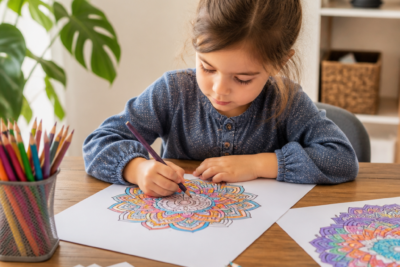
Mandalas are circular designs that invite steady, repetitive attention. When children color or draw them, they often slip into a rhythm: choose a color, fill a section, repeat. That “loop” is more than just fun. It creates a gentle structure that helps kids practice staying with a task. Over time, this can improve focus, patience, and self-regulation.
Many parents and educators now use mandalas as part of educational activities because they combine art with mental skills—without feeling like a “lesson” kids resist. Whether you’re looking for coloring pages for a rainy afternoon or planning a calmer classroom routine, mandalas can be a practical, accessible option.
Anuncios
Context and History: A Brief Story Behind Mandalas
Origins and meaning
The word “mandala” comes from a tradition that means “circle” or “completion.” Across various cultures, mandalas have long been used as spiritual and symbolic tools—often representing wholeness, balance, and the journey inward. While modern kids’ mandalas are simplified for younger artists, the core idea remains: a structured pattern helps the mind settle.
From ancient practices to modern classrooms
In recent decades, mandala-based activities have spread into educational and therapeutic settings. Teachers use them during focus-building moments, and therapists incorporate similar pattern work to support emotional regulation. The contemporary appeal is simple: mandalas are easy to understand, visually engaging, and flexible enough to suit many learning styles.
How Mandalas Help Improve Children's Focus
1) They turn attention into a “guided” activity
Anuncios
Children’s attention often jumps because the brain is constantly scanning for novelty. Mandalas provide novelty—colors, patterns, and choices—while still offering a clear structure. The circular layout and repeated sections act like a visual map, guiding children to keep working inside a defined space.
When kids focus on completing one section at a time, they practice sustained attention. That’s concentration in a kid-friendly form: “Stay with this pattern until it feels done.”
More Articles
 Animal Mandalas
Why Animal Mandalas Are So Popular
If you have ever caught yourself searching for "something to calm me down" after a...
Show More Flower & Nature Mandalas
The Relaxing Benefits of Flower and Nature Mandalas
If you’ve ever felt your mind running a little too fast—scrolling, worrying, planning, repeating—you’re not...
Show More2) The repetitive process supports self-control
Coloring isn’t just random. When children fill each part of the mandala, they repeat a simple sequence: observe, choose, color, move. Repetition is calming and can reduce the mental “noise” that leads to impulsive behavior.
This is where mindfulness for kids enters naturally. Mindfulness isn’t about stopping thoughts completely—it’s about noticing what you’re doing in the present moment. A mandala makes it easy for kids to stay in the “now,” because their attention has a job: complete the pattern.
3) Choice + boundaries create productive engagement
A great mandala activity balances freedom and structure. Kids can select colors and patterns, but the mandala’s design sets boundaries. That combination can be especially helpful for children who struggle with focus because it prevents the task from feeling too open-ended.
Many adults underestimate how motivating boundaries can be. When children know what to do next, they spend less energy figuring out the task and more energy actually doing it.
4) Visual processing strengthens “staying on task” skills
Mandalas involve visual scanning and careful coordination: children match shapes, track lines, and stay within sections. This supports attention to detail—an important component of focus in academic settings like reading, math, and handwriting.
Even simple coloring pages can gently train the visual system to track, follow, and complete.
5) The activity can be timed to build focus gradually
Because mandalas come in many levels of complexity, you can adjust the challenge. Start with simpler designs and shorter sessions. Over time, increase the detail or length of the activity.
That gradual progression supports learning by letting children experience success while also stretching their attention span in a comfortable way. It’s a practical approach used in many educational activities: small steps, consistent practice.
Benefits and Importance: What Kids Gain from Mandala Coloring
Boosts concentration and calm attention
One of the most direct benefits is improved concentration. Coloring a mandala requires sustained engagement, which helps children “stay with it” longer than they might with a more chaotic activity.
In many homes, parents notice that children become calmer and more settled during and after mandala sessions. That calming effect can help reduce restless energy and support smoother transitions—like from playtime to homework.
Encourages creativity without overwhelming children
Kids mandalas are creative by nature, but they don’t demand artistic perfection. Children can experiment with color combinations, shading styles, or repetition. Because the design is already there, creativity focuses on choices rather than on drawing skills from scratch.
This supports creativity while keeping the task achievable, which is crucial for motivation. When children feel capable, they’re more willing to practice skills that require focus.
Supports emotional regulation and mindfulness
Coloring can become a “pause button.” When children concentrate on patterns, they often have fewer opportunities to spiral into frustration or impulsivity. Mandalas can be a simple outlet for big feelings.
That’s why many people describe mandala coloring as mindfulness for kids: it helps children slow down, notice their actions, and find a steady pace. The experience can be soothing, especially before bedtime, after school, or during stressful days.
Develops fine motor skills and attention to detail
Mandala coloring encourages controlled hand movements—holding a crayon, staying within lines, and filling shapes carefully. Over time, that practice can help fine motor development and the ability to focus on details.
Because kids must follow the structure of the design, they also practice sustained attention—an essential foundation for many school tasks.
Easy to use with printable resources
Another reason mandalas are popular is convenience. Many parents and teachers choose printable coloring pages because they’re ready whenever you need them. You can print a few options, keep them in a folder, and use them as quick calming activities.
Search for coloring pages that match your child’s age and interests—simple mandalas for younger kids, more detailed designs for older children. With the right level of challenge, mandala time can feel both relaxing and rewarding.
Practical Ideas: Using Kids Mandalas in Daily Routines
Simple strategies for home
- Start short: Try 5–10 minutes at first, then extend as focus improves.
- Create a routine: Use mandalas after dinner, before homework, or after school to help children transition.
- Let them choose: Offer a small color set so they feel ownership without decision fatigue.
- Encourage “one section at a time”: This reduces overwhelm and keeps attention on the next step.
Classroom-friendly ways for educators
- Mindful starter activity: Use a mandala page during the first 5 minutes of class to settle the group.
- Independent work time: Assign a mandala as a quiet option during centers or stations.
- Reflection prompts: Ask kids to describe how the process feels—calm, focused, or excited—then connect it to learning and self-awareness.
When to adjust the difficulty
If your child becomes frustrated or loses interest quickly, the mandala might be too complex. Choose simpler kids mandalas or fewer sections. If focus is strong, you can move to more detailed designs. The goal is steady improvement, not perfection.
Conclusion: A Fun Art Tool That Builds Focus
Mandalas offer a rare combination: they’re engaging, accessible, and genuinely supportive of focus. Through guided structure, repetitive motion, and calming attention, kids can strengthen concentration while exploring creativity. Whether you use printable coloring sheets, classroom educational activities, or simple coloring pages at home, mandala practice can become a meaningful way to nurture learning and mindfulness for kids.
In the end, mandalas don’t just create pretty pictures—they help children practice staying with a task, regulating emotions, and enjoying the process of focusing. That’s a win for kids, parents, and teachers alike.