
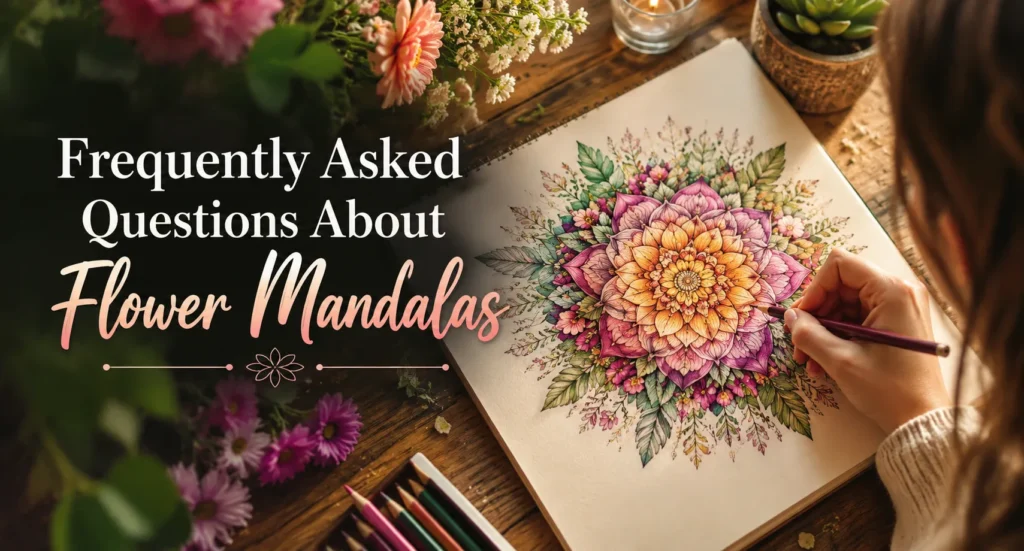
Frequently Asked Questions About Flower Mandalas
Anuncios
Flower mandalas are more than pretty designs—they’re a calming way to slow down, focus your mind, and create something meaningful with your own hands. Whether you’re searching for floral coloring pages for kids, looking for printable templates to keep at home, or exploring mandala art as a relaxing hobby, flower mandalas can fit right into your daily routine. To help you find answers quickly, here’s a practical FAQ guide to some of the most common questions people have when they start coloring or printing these beautiful patterns.
What are flower mandalas?
Flower mandalas are symmetrical, circular designs that use flower shapes as the main visual theme. Like other mandalas, they are built around repeated elements—petals, leaves, vines, and often dot or line accents—to form a balanced composition. Many people find that the symmetry helps them stay focused while coloring, turning the experience into a calming, meditative activity.
In practice, flower mandalas can be simple or highly detailed. Some styles use large petals and fewer sections, which makes them great as floral coloring pages for beginners. Others include intricate layers and tiny patterns, which are perfect for experienced colorists who enjoy detailed mandala art and immersive coloring sessions.
Anuncios
Are flower mandalas suitable for beginners?
Yes—flower mandalas are one of the best options for beginners because you can choose a pattern level that matches your comfort. Many creators offer easy designs with fewer sections and larger shapes, allowing you to learn how to color evenly, use color variation, and stay within the lines without feeling overwhelmed.
If you’re new, start with a basic template that has clear, separated petals and minimal micro-patterns. You can also build confidence by experimenting with one color family at a time (for example, soft pinks and purples) before moving into more complex palettes. A good set of printable templates can make it easy to try multiple designs without committing to one expensive project.
What materials do I need to color flower mandalas?
Anuncios
You don’t need a complicated setup to enjoy relaxing coloring, but a few tools can dramatically improve results. Popular choices include colored pencils, gel pens, fine-tip markers, and watercolor pencils. Colored pencils are especially forgiving, since you can layer gently without bleeding much on most paper types.
If you plan to use markers, choose thick paper or designs meant for marker-friendly coloring. A small blending tool, like a blending stump for pencils, can help create smooth gradients inside petals. When you download PDF downloads or print free printables, check whether the template is intended for pencils, markers, or both—this can help you select the best materials from the start.
More Articles
 Mandalas for Adults
Why Mandalas for Adults Are Great for Stress Relief
Ever notice how a busy day can make your mind feel crowded? Between notifications, deadlines,...
Show More Mandalas for Kids
How to Print Mandalas for Kids Step by Step
Looking for a fun, low-stress activity that keeps kids engaged and calm? print mandalas are...
Show MoreWhere can I find printable flower mandalas?
Many people search online for printable templates because it’s convenient: you can download, print, and color right away. Look for sources that offer a variety of designs—simple, intermediate, and advanced—so you can progress naturally as your skills improve.
When choosing a collection, make sure the files are easy to access and well organized. Some sites provide individual pages, while others offer bundles as PDF downloads. If you want to try a design before committing, check for free printables or sample pages. That way, you can test print quality and line thickness before printing larger sets.
What’s the best paper for floral coloring pages?
The best paper depends on the coloring medium you use. For colored pencils, standard printer paper often works, but thicker paper (around 120–200 gsm) can help you avoid paper buckling and improve blending. For markers, aim for heavier, marker-compatible paper to reduce bleed-through and keep edges crisp.
If you’re printing at home, consider testing one page first. Print a single design and check for feathering, smudging, and bleed. This step is especially helpful when using detailed floral coloring pages, because thin lines can be harder to color precisely if the paper absorbs ink too quickly.
Do I need to print in color or black and white?
Most people prefer black-and-white designs when working with mandalas, because it keeps the focus on your own creativity. A blank template encourages experimentation with color combinations—warm versus cool tones, monochrome gradients, or even bold contrasting palettes.
However, some collectors also like pre-colored styles for inspiration. If your goal is to relax, black-and-white patterns are often best because you control every decision. Whether you’re using flower mandalas for mindfulness or creating artwork for a gift, starting with a simple base gives you more freedom and fewer distractions.
How long does it take to color a flower mandala?
Time varies depending on the design complexity and your coloring style. Easy mandalas may take as little as 20–40 minutes, especially if the pattern has fewer sections and large shapes. Intermediate designs might take 1–2 hours, while highly detailed patterns with micro-details can stretch into multiple sessions.
The best approach is to color at a pace that feels satisfying rather than rushed. Many people enjoy relaxing coloring as a wind-down activity, so finishing in a single sitting isn’t always necessary. If you’re working with a complex template, you can rotate through petals over time and return later—your progress will still look beautiful.
What are some beginner-friendly coloring techniques for mandalas?
Start with simple techniques that create a polished look without requiring advanced skills. One easy method is “color blocking,” where you choose one or two colors per section and fill evenly. This immediately makes the mandala look cohesive and structured.
Another beginner technique is using gradients: select a base color and gradually deepen it toward the center or the edges. You can also try alternating light and dark shades around the circle to emphasize symmetry. Even if you’re using basic tools, consistent coloring pressure and clean edge work can make your mandala art feel professional.
Can kids color flower mandalas?
Absolutely—many children enjoy coloring mandalas because the repeated shapes can feel engaging and predictable. For kids, choose simpler designs with thicker lines and fewer tiny details. This helps them finish without frustration and encourages creative confidence.
Flower mandalas can also be great for classroom activities, quiet time, or road-trip entertainment. To keep the experience fun, consider using a limited color palette (like primary colors or pastels) so kids can focus on filling patterns rather than deciding from dozens of shades. If you’re searching for floral coloring pages specifically for younger children, look for “easy” or “kid-friendly” patterns.
Are there benefits to coloring flower mandalas for stress relief?
Many people use flower mandalas as a stress-relief tool because the repetitive design encourages a steady, calming rhythm. When you color within a symmetrical pattern, your mind often shifts away from anxious thoughts and toward the simple act of coloring and noticing details. That combination—focus plus repetition—is a big part of why people describe relaxing coloring as therapeutic.
Even if you don’t treat coloring as a formal mindfulness practice, you can still enjoy the benefits. A short session each day can help you unwind, improve concentration, and build patience. Plus, it’s satisfying to create a tangible piece of art you can keep or share.
How do I choose the right flower mandala design level?
A simple way to choose is to match the mandala to your current mood and energy. On busy days, pick easy designs so you can finish quickly and feel accomplished. On calmer days, choose more detailed patterns and let yourself get immersed in the smaller shapes and textures.
When browsing collections, look for labels like “beginner,” “intermediate,” or “advanced.” If the template includes extremely tiny repeating elements, it’s likely aimed at more experienced colorists. If you’re downloading PDF downloads, check whether the set includes multiple difficulty tiers, so you can grow gradually without constantly searching for new files.
What are PDF downloads and are they safe to use?
PDF downloads are files that preserve the design layout and make printing easy. Instead of relying on a screenshot or a stretched image, a PDF typically keeps the lines crisp and the page size consistent. That’s especially helpful for mandalas, where symmetry and edge quality matter.
Regarding safety, use trusted websites and avoid downloading from sources that look unprofessional or ask for suspicious information. If a site offers free printables, it should still provide clear instructions and an easy download button. If possible, read reviews or check whether the site has a stable reputation. Once downloaded, open the PDF with a reputable viewer and print directly from there.
How can I organize my flower mandala collection for easy printing?
Organization makes the hobby smoother. Start by creating a folder on your computer or cloud drive specifically for flower mandalas, then separate by difficulty level or theme. For example, you might have folders labeled “easy,” “detailed,” “spring florals,” or “rose mandalas.” This reduces friction when you want to print quickly.
Next, consider numbering your pages or adding notes in a spreadsheet. Write down which templates you love most, which paper worked best, and which coloring medium you used. Over time, you’ll build a personal library of go-to designs—especially useful when you want fresh inspiration but don’t want to browse endlessly.
Where can I get free printables for flower mandalas?
Many creators share free printables to help people practice and enjoy coloring without cost. When searching, focus on collections that offer multiple designs, clear line art, and good print quality. You’ll get more value if the set includes a range of styles and difficulty levels rather than just one or two pages.
Always check the download format and confirm that it’s compatible with your printer. If you need accurate sizing, prioritize sources that clearly mention standard paper dimensions (like A4 or Letter). A well-organized set of printable templates can help you start coloring today—even if you’re experimenting with new color palettes for the first time.
Can I sell my finished mandala art?
It depends on the license and the source of the template. Many free or printable designs are for personal use only, meaning you can enjoy coloring them, display them, or gift them, but not resell the finished artwork commercially. Some creators provide commercial licensing, and others explicitly prohibit sales.
If you plan to sell your finished mandala art, check the terms associated with the specific design. Look for language about “personal use,” “commercial use,” or “redistribution.” When in doubt, contact the creator or choose templates labeled for commercial use. Protecting your creativity and staying compliant will help you build a long-term, stress-free practice.
Conclusion: Are flower mandalas worth trying?
Yes—flower mandalas are absolutely worth trying if you want a creative outlet that feels calming, structured, and fun. With the right floral coloring pages, convenient printable templates, and accessible PDF downloads (including free printables), you can start coloring today and quickly discover what style and difficulty level fits you best. Whether you’re looking for a simple relaxing hobby or a deeper focus on mandala art, the process is designed to be enjoyable from the first page.
Pick a beginner-friendly design, choose your coloring tools, and give yourself permission to enjoy the journey. Flower mandalas won’t just result in beautiful artwork—they can also become a reliable ritual for relaxing coloring and personal calm. Happy coloring!